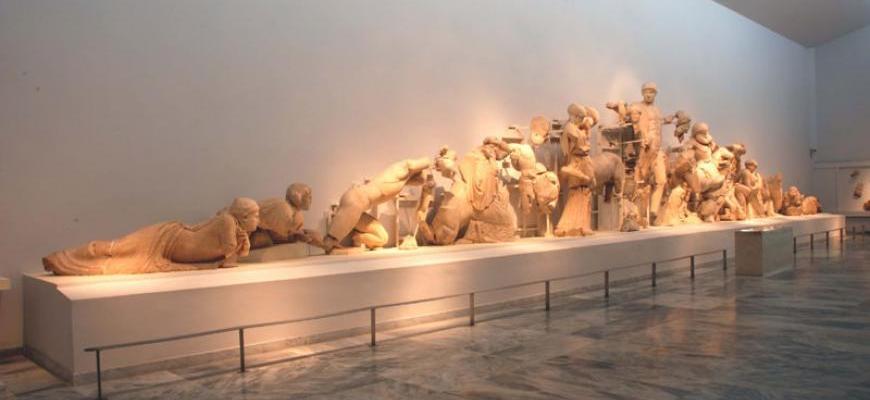
The Archaeological Museum of Olympia, one of the most important in Greece, presents the long historical development of one of the most glorious sanctuaries of antiquity, which was dedicated to Zeus, the father of gods and men, and was the cradle of the Olympic Games. It includes a permanent exhibition of finds from excavations at the Althea sanctuary, dating from prehistoric to early Christian times. Of all the priceless exhibits, the most important is the exhibition of sculptures, for which the museum is mainly known, as well as the collection of bronze objects, which is the richest in the world and consists of weapons, figurines and other objects, while the findings of the great clay sculpture are particularly important.
The building complex of the Museum consists of exhibition, auxiliary and storage rooms. The exhibition area includes the vestibule and twelve rooms, all of which house the permanent exhibition of finds from the sacred alti. The auxiliary-functional areas for the service of visitors (refreshment room, sanitary facilities, etc.) are located in the eastern wing of the museum, while the shop operates in a separate building between the museum and the archaeological site. The museum has storage areas, which occupy part of the east wing and the basement, as well as workshops for the conservation of clay, bronze, stone objects, mosaics and small finds.
The Archaeological Museum of Olympia, which is supervised by the Z’ Ephorate of Prehistoric and Classical Antiquities, is a living organization, which, especially after its reconstruction in 2004, on the occasion of the Olympic Games in Athens, aspires to present to the visitor the long history of the sanctuary, according to the new museological concepts. Author Olympia Vikatou, archaeologist.